Old Punks Who Look Like Thumbs #2

A straw man is a form of argument and an informal fallacy based on giving the impression of refuting an opponent’s argument, while actually refuting an argument that was not presented by that opponent. One who engages in this fallacy is said to be “attacking a straw man.”
So someone copied and pasted a small part of the previous blog, referencing the escalation of bullying into hate and violence, into various FB threads discussing Louise Distras and Kickstarter and completely lost the context.
Naturally the knobheads who were actively engaging in that shitshow (and screen capping everything in the process…) decided to turn it into a straw man argument, saying that it meant those abusing Louise were being equated with a mass murderer. Any understanding of the escalation of hatred was gone, and was perhaps deliberately misinterpreted by some.
The following piece by NonCompete explains really clearly how online comments, memes and bullshit ‘edgy’ humour gains momentum and can be genuinely dangerous.
If you want to argue your right to free speech on subjects like Louise’s Kickstarter campaign you need to know what you’re talking about.
Under Article 10 of the Human Rights Act people are entitled to free speech but in the UK it can have some restrictions, which can be “in the interests of national security, territorial integrity or public safety, for the prevention of disorder or crime, for the protection of health or morals, for the protection of the reputation or rights of others, for preventing the disclosure of information received in confidence, or for maintaining the authority and impartiality of the judiciary”.
In addition to this Section 4 of the Public Order Act 1986 makes it an offence for a person to use “threatening, abusive or insulting words or behaviour that causes, or is likely to cause, another person harassment, alarm or distress”.
It’s not acceptable to shrug off horrible things you’ve said with a flippant “it was just a joke ” or “the internet isn’t real.”
We’re each individually responsible for what we say in person or online and the effects our words have, especially when it contributes to people getting hurt or worse.
This is recurring topic that people love to discuss and it’s reared its complicated, spiteful head again.

I can’t say that I’m a fan of Louise Distras.
I’ve never bought her merch or gone out of my way to see her perform and my personal interactions with her have been brief, infrequent and a little uncomfortable, but I’m bored of seeing this topic being repeated and deteriorating a little more with every occurance.
I’m really disappointed to see the same people getting some sort of perverse pleasure out of it, particularly the people I know and hold to the higher standards they claim to have.
Something that really stands out is that while there’s a significant amount of venom directed towards Louise on a regular basis, it doesn’t seem to happen to others who have behaved similarly or worse. The idea that other musicians (who’ve received significantly more money through pledges than Louise has) might have defrauded their donors simply doesn’t enter into the conversation, and people whose behaviour is worse aren’t mentioned at all.
Louise set up a Kickstarter to request funds to record a new album. £12,654* was pledged by fans, which 15% more than the amount she aimed to raise. Some members of the public who haven’t pledged a single penny to her are very annoyed about there being no visible product (that they wouldn’t buy anyway) and no clear account of how the Kickstarter money has been spent.
Lots of bands, including the likes of UK Subs and Hands Off Gretel, have also used crowd funding platforms to raise cash for recording. These two bands used Pledge Music which displays the amount raised as a percentage rather than a figure – for example Hands Off Gretel raised 212% of their goal but the actual amount of money they raised isn’t shown. Kickstarter shows both the total amount raised and the percentage of the goal amount, so the fact that Louise raised £12,654 for her new album is publicly available information.

Crowd funders can be set up for almost anything – medical bills, housing and food costs, potato salad (?) or a Mexican border wall – and they frequently offer rewards to pledgers. The rewards offered by Louise Distras, UK Subs and Hands Off Gretel are all pretty similar to each other and include merchandise, artwork, used equipment, or a private gig in your house.
There have been some high profile cases of crowd funding fraud – for example a recent one where a couple raised $400,000 for a homeless man under false pretenses and spent most of it on themselves. The cases that receive such scrutiny, however, tend to involve significant amounts of money (£300,000 +) rather than the £12,000 that is grumbled about in Louise’s case.
Prof. Ethan Mollick of the University of Pennsylvania has been conducting research on Kickstarter for several years and this has culminated in the Wharton Crowdfunding Study, which aims to understand the impact of crowdfunding on creators, backers and society. Prof. Mollick states;
“Fraud is rare, though delays are common. Crowdfunding has been remarkably free from fraud, even though over 75% of projects deliver late.”
One key piece of information that Louise’s detractors have conveniently forgotten is that when backers pledge to a Kickstarter project they’re investing in it, rather than buying something.
They’re willingly and voluntarily donating their money to her.
Many Kickstarters offer rewards to backers that tend to increase in proportion to the size of the pledge (for example, someone pledging £5 might get a sticker and postcard whereas someone pledging £500 could receive the whole finished product with event tickets and bundles of merch) and this is where the confusion lies. People frequently misinterpret investing in a project to mean that you’re buying the rewards.
Kickstarter has guidelines and terms of use published online and every Kickstarter project has a “report this project” option. In the terms they state that they don’t get involved in disputes “…between users and any third party relating to the use of the Services. We don’t oversee the performance or punctuality of projects…”
In law a third party is someone who is not directly affected by or involved in a matter, so unless you’ve contributed money to the Kickstarter(s) you are a third party and you’re not entitled to report a complaint about the project.
You’re not entitled to see accounts, receipts, or any form of transparency about how the money has been spent.
In the law of England and Wales there’s the Contracts (Rights of third Parties) Act 1999, but I think anyone would be hard pressed to prove in a court of law that Louise’s Kickstarter forms a contract with third parties or that Facebook complainants can prove they’d benefit from the Kickstarter in any way.
The backers have willingly donated money to her for recording and for airfare to/from Punk Rock Bowling. Those who are the most vocally upset about it haven’t given her any money, so it’s hard to comprehend why there is a such an intense, recurring outpouring of rage.
Parallel to this is another issue that isn’t receiving attention. Pledge Music seem to have been having serious issues and the money Hands Off Gretel’s fans pledged to their campaign (over £25,000 according to an interview on https://www.rgm.press/ dated 26 February 2019) is in limbo. They were, however, still able to release their album as fans pledged even more money to them directly.
That’s more than double what Louise was pledged however I haven’t seen Hands Off Gretel receive anything remotely like the venom that has been directed towards Louise.

The outpouring of vitriol has clearly been influenced by personal gripes a lot of people have with Louise over various incidents. Without going into too much detail these include;
Any one of these points could apply to many, many people who aren’t Louise Distras. I’ve been subject to each of the above behaviours multiple times on the gig circuit, but coming from several other people who are not Louise Distras.
Musicians who I know well make statements against rape, then play gigs with rapists. Or are antifascist and go on tour with racist homophobes. Or make jokes about disabled people, child abuse, etc ad infinitum.
Many people cancel gigs without little notice, or do no promotion for a gig and expect a band to travel for 5 hours with no guarantee of a crowd, petrol money or anywhere to sleep. Many bands put money into a gig without seeing any return. Many people are entitled shits who demand to have their bags carried and their food brought to them, and many people use “girls to the front” rhetoric without being shouted down for it.
It’s always lovely to be around engaging, polite and friendly people who behave with integrity and honesty, but you’re not entitled to niceness.
There are difficult, unpleasant people everywhere who don’t owe you anything.

Louise is being singled out over her behaviour whereas there are people with the reputations of P. Paul Fenech or Jorge Herrera who aren’t discussed with the same level of disdain, but are worshipped as heroes.
This would lead one to believe that there’s a bias against this woman, who is being touted as answerable for the kind of misbehaviour that is tolerated, excused, admired or even encouraged in men.
The comments I’ve seen levelled against Louise have been horrible. People have said she deserves HIV or kneecapping, or that she’s used the money for heroin and plastic surgery, and a couple of bands have even recorded songs slagging her off. Some folks are circulating a list of choice quotes slating her and it’s almost comically predictable that it’s mostly coming from the same few men – the same men who tolerate bullshit behaviour from other men.
I suppose that several of her detractors feel aggrieved that Louise is “sullying the scene” and taking advantage of people, and believe that they’re raising awareness of this so that it doesn’t happen anymore.
But that’s utter bullshit because it’s not reaching the people who donate money to Louise, nor the promoters who book her, people who go to see her shows or buy her merch.
There’s no nobility in any of the conversations that are happening. Loads of the people slagging Louise off and threatening violence are the same who take an anti-bullying stance elsewhere, or a feminist stance, or an anti-rape stance, etc but then take part in this crap whilst cosying up to sex offenders, domestic abusers, etc.
At the present time most people probably have a keen understanding of how hate escalates. We know that little bits of aggression repeated over and over – insults, slurs, saying you’d like to hit someone, that they don’t deserve basic human rights – builds up until someone gets physically hurt.
After the recent shootings in New Zealand it’s simply not good enough to say that these statements aren’t serious. This shit has the potential to really hurt someone, if not as a result of a physical attack then almost certainly an impact on someone’s mental health and self-esteem.
There’s a fair bit of addiction shaming going on too, again from the same people who would acknowledge that nobody chooses to be an addict if the subject of their gripe was anyone but Louise Distras.
Paradoxically a few of those writing the hateful comments about Louise are the same who quote Joe Strummer on manners yes still somehow perceive themselves as superior to any of the bottom feeders on 8chan. Their crowing about a recent and potentially slanderous amendment to her Wikipedia page and their spurious claims of fraud do nothing to dissuade one that this is just a big, group-wank of a vendetta.
Sadly these chaps probably haven’t considered that due to this example of their behaviour there’ll now be several women who have silently lost any trust they previously had in them.
*Edited to add – since publishing this yesterday I’ve realised something even worse about this steaming pile of shit.
Some of Louise’s detractors have made spurious fraud reports about her to Facebook and/or Kickstarter, with no evidence that she’s actually committed fraud. Yet in other situations – specifically where a woman has been raped or assaulted – they automatically disbelieve the victim due to there being no proof publicly available and welcome the perpetrator back into the fold as though nothing had happened.
Slow clap, fuckers. You’ve shown your true colours and your behaviour is disgusting. If you want some integrity in the scene do some work on your own fucking integrity.

*some people have been banging on about another, earlier Kickstarter that raised £5,000. I can’t find much about it and I can’t be bothered to conduct any more research on it for the sake of whiny little boys.

When I was small my exposure to music amounted to watching Dave Lee Travis and Jimmy Saville presenting Top Of The Pops, and wondering why my next door neighbour painted a white stripe over the bridge of her nose.
Later, during an annual day trip to Blackpool, my Glo-Worm and I hid behind my Dad as we passed a group of spiky, studded punks stomping and spitting their way through the town centre as they channelled noise from the fifth circle of hell through a battered Sanyo stereo. This was to be my enduring image of punk for the next 15 years.

A lifelong interest in etymology began in around 1999 when I saw the word punk in a book dating from from the 1670s, but it clearly it had a different meaning back then.
The word punk could have originated from one of several different sources including:
Sex workers were referred to as punks throughout the 1500s and 1600s and were mentioned by Shakespeare in The Merry Wives Of Windsor (1602) and Measure for Measure (1623).

This use for the word became obsolete over the next couple of centuries until eventually it meant the bottom in a Victorian male-male sexual relationship in gaol, then during the 20th century it morphed into the word we use today to describe juvenile delinquents, hooligans, worthless individuals and punk rock(ers).
More recently it’s also been used to mean a defeat in sports, or a prank – partially thanks to Ashton Kutcher who traumatized a pair of holiday makers with a fake corpse, was then sued by them for $10 million and had to change the name of his You’ve Been Framed tribute show to Punk’d.

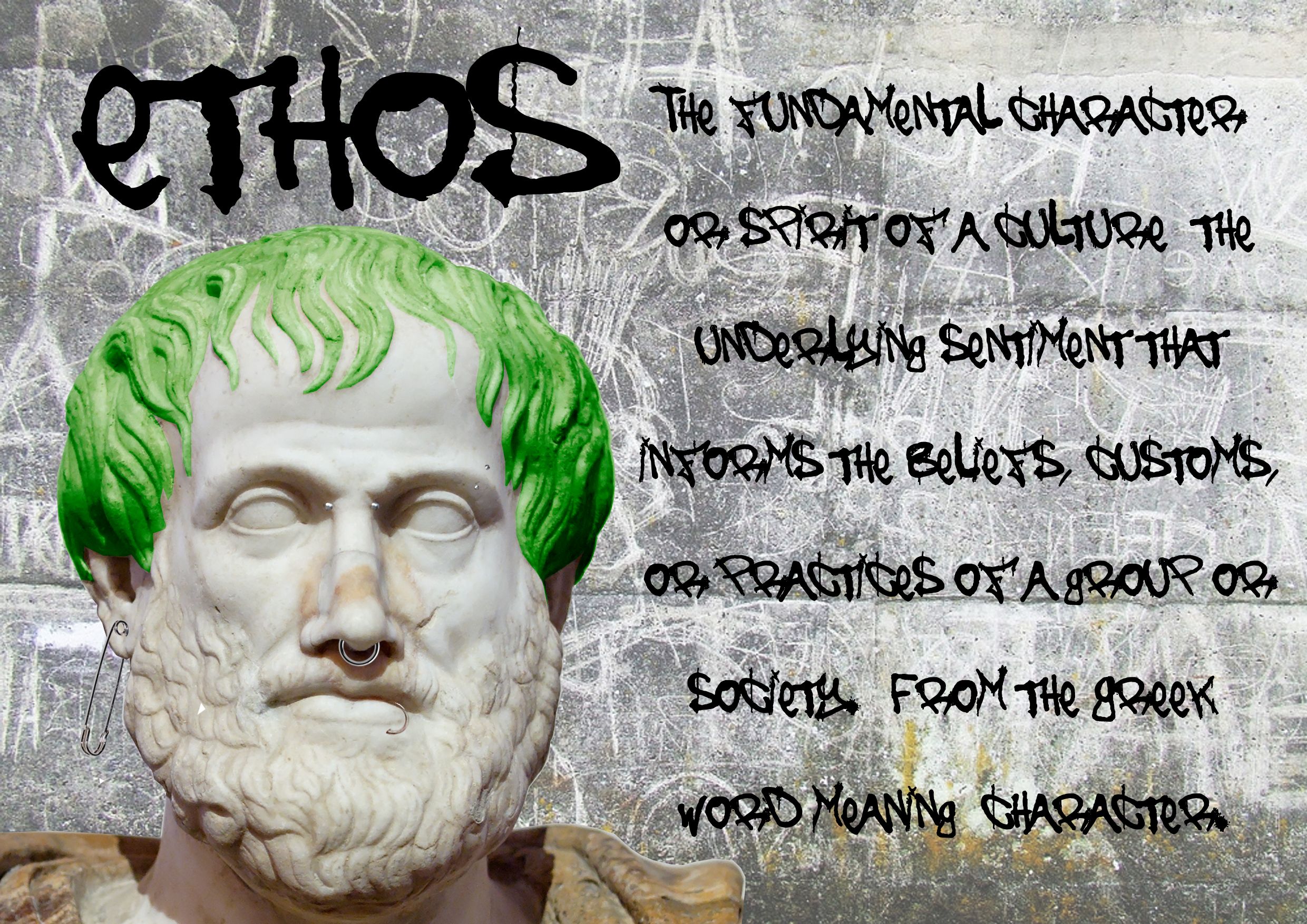
There isn’t a universal definition, but the most consistent idea seems to be that it’s about rebelling against the status quo and being an individual with the freedom to express this however you choose. Using your anger and energy to make a positive difference in the world – whether that’s through music or activism or anything else. Equality across races, genders, sexualities, beliefs, disabilities and other characteristics. Contributing to a community built around punk and helping it to develop in some way. Doing it yourself, helping others to do it themselves, and maintaining an alternative to the regimented, oppressive, life destroying factions of the world.
A punk ethos, if you will.
A few years ago I was in a Blackpool chippy when another diner asked me why the town was full of punks. I told him about Rebellion and he seemed really keen in going the following year, saying “I used to be a punk when I was a teenager.” He was an absolutely average looking bloke – no piercings or tattoos that I could see, nondescript haircut and plain, neutral clothing. Someone who would really stand out against a sea of Harringtons and Dirt Box Disco t-shirts, and he’d probably need to dress differently if he wanted to blend in with the crowd.
But if he used to be a punk, does that mean that he was never one to begin with?
I’ve heard people say something like this a few times, and talking to this chap made me think about it a bit more.
It’s used to describe people who’ve changed in some way and moved away from the scene. Maybe they cut off their liberty spikes, donated their vinyl to Oxfam and started wearing a suit for work but they still like to reminisce about their punk phase every now and then. The phrase insinuates that people like this were never “real” punks – that they were just dressing up and joining in for a bit of a laugh rather than being a committed member of the community and that they’re somehow less authentic than the people who stick with the scene.
Each of us becomes an individual through a process of change and evolution, usually in our teens and early 20s when we’re rebelling against our parents and authority in general. If we didn’t go through this change we’d be composites of our parents with their tastes, their beliefs and their habits, then our children would become composites of us, etc ad infinitum. Sounds pretty dull.
You can’t delete a part of your life because of someone else’s standards, and the expectation that a person should repress their experiences, habits and feelings simply to satisfy the general idea of how a punk should look and behave goes against the ideas of individuality and expression. It would create a community of stereotypes in a uniform and, more uncomfortably, it expresses the idea that people who visibly comply with the scene’s conventions are somehow superior to those who don’t.
That seems to describe a hierarchy.

The first time I experienced anything to suggest that a hierarchy exists was as I stood in a very long line to get into Rebellion and Charlie Harper cut through the queue, muttering something about “pulling rank”. Before this moment I’d been under the impression that there was no rank in punk because everyone was equal and it was a community but Charlie gave me reason to doubt that, and the doubt has grown ever since then.
In a traditional hierarchy people are ranked according to relative status or authority. The Catholic church, for example, has a very clear hierarchical structure that’s been the same for centuries, but in a cultural group like punk the order isn’t clearly defined and while some individuals or groups are heralded as the epitome of punk due to them being torchbearers for all the best punk qualities others can shun part or all of the ethos and still be just as highly regarded.
The criteria for the punk hierarchy appear to include maintaining a stereotypically punk style of dress, socialising very frequently, attending particular events and festivals, having knowledge of certain bands’ back catalogues, maintaining friendships with popular bands or promoters, and being a vocal supporter of the general consensus of the community on any given topic.
There are several characteristics that add or detract from a person’s social standing but any conversation about it gets shut down straight away. Far too predictably these are gender, race, age, sexuality, disability and religion/beliefs.
If you outwardly fit the default settings of these characteristics – male, white, between 18 and 64, straight, able bodied and non-practicing Christian – you’ll fit right in, as will those who complement these default punks in some way such as being a female partner or relative. All the other characteristics are acceptable if they’re of some use to the default, such as being an entertainer or providing some sort of service.
Bias against black and ethnic minorities, women, LGBT+ people, those with disabilities or religious folks isn’t exclusive to those who go to “The Real Rebellion”. It’s all around us, all of the time and sadly it’s far too common in punk.
Consider the women in the punk community who’ve stated they’ve been assaulted or raped and how they’re shouted down, ridiculed and castigated as a result. Think about how many different ethnicities you see at a gig, how those around you talk about transgender people, whether they’re sick of the ‘PC brigade’ or ‘punk police’ and think politics and music should be separate. Do many of them shout at female musicians to get their tits out, or joke about it away from the stage? How many of these people regularly engage in derogatory jokes about rape, mongs, P*kis or Jews, or openly hate immigrants?
Jokes are supposed to be funny, and if you have to explain it or if it hurts someone then it’s not funny.

The thing is we all know this type of shit happens and have probably done a bit of it ourselves at some point, but we all have the capacity to do better. If you genuinely can’t see these things happening and understand that they hurt people you’re either tolerating it, ignoring it, or taking part in it.
Through thousands of small, consistently repeated and tolerated acts of bigotry we increase the confidence of a minority of people and enable them to behave in worse ways. The image below is the tip of this particular iceberg although the people in it didn’t spontaneously develop fascist beliefs out of nowhere. Over time they were repeatedly in situations that allowed them to gain enough confidence to behave this abhorrently, and also find other people doing the same thing.

But this is not punk.
This is fear, anger, pain, oppression and suffering.
This is hurt boys and men who don’t know how to handle their pain so they inflict it on other people and create more of it.
We know how this escalates if it goes unchecked, and we know how it ends. But we all have the ability to do better
Of course there is. There’s always an alternative, and that’s what the heart of punk is.
You’ll find it in the small practice/recording studios putting on BYOB gigs where huntsabs can set up a food stall to raise petrol money, or in spaces where people run workshops teaching others how to play an instrument or how to screenprint, who donate proceeds to small local animal rescues or domestic violence shelters, and independent hairdressers giving a whole days’ work to raise funds for cancer nurses.
It’s respectful and inclusive and it does or makes things to assist those who need help. It’s understanding that everything you do has an effect, good or bad, and trying to learn from it and do better the next time around.
It’s against causing pain and suffering, and while it may not use legally permitted methods it’s intention is morally right.
It’s anti-Tory, anti-establishment, and antifascist. Yes it’s a fucking safe space.


Shut up and drink your overpriced piss, Tony.
The British punk community is in an awful state.
The “punk rock family” doesn’t exist. If you very lightly scratch the surface you’ll find an underbelly bloated with all sorts of -isms, abuses and problems that nobody likes to acknowledge or talk about.
It’s time to talk about it.
Enjoy, and please – for fucks sake – try to be nice to each other.

 Punk Problems